


Janet Gleeson was in conversation with Jess Morency.
Having watched more than 300 talks in the eleven years Janet Gleeson has been running the Dorchester Literary Festival, she has a good idea of what makes both a good interviewer, and interviewee.
‘Basically, when it comes to the interviewer they’ve just got to be a really good listener, a great sounding board, and ask the kinds of questions that encourage the speaker to tell their own story,’ she says. ‘The audience is there to learn about the book, and perhaps a bit about the writer, but rarely the person interviewing them.’
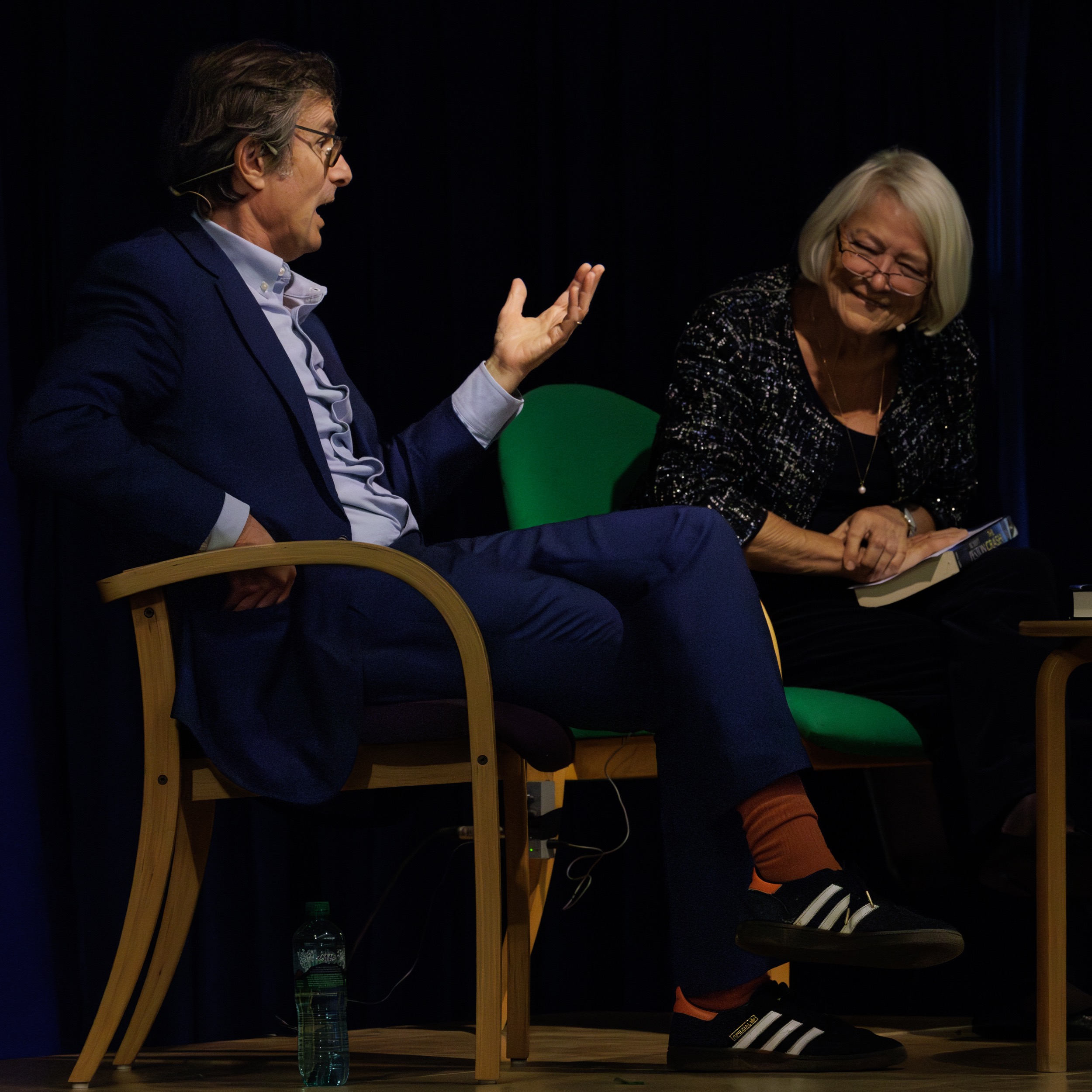
Obviously, there’s always an element of the unexpected. ‘When we had Kate Adie interviewing Robert Peston, that was like a love match on stage. We’re really lucky to have her as she’s such an icon, and the two of them worked brilliantly together. Possibly because the subject matter was a thriller he’d just written, which wasn’t what you might expect from a conversation between two seasoned journalists.’
Asked if other unexpected things have happened, her mind immediately jumps to Sarah Vine. ‘She wanted to take her dog on stage with her, and after a while it hopped off her lap and was doing a canine version of crossing its legs. Luckily it was happy for me to scoop it up and take it outside.’


Then there was the day that the former MP, Johnny Mercer was due to speak. ‘That morning the news broke that he’d called Theresa May’s government a ‘shit show’ in the House of Commons magazine. So his arrival at the festival was accompanied by camera crews and pap photographers. I was waiting outside to meet him and was impressed by his cool in dealing with them. It made a great start to his talk.’
Very occasionally things have become interesting when people are late or have simply failed to turn up. ‘Someone once just completely forgot. When we phoned him he was at home, three counties away. But we have a pretty slick system going, involving lots of reminders and letters of agreement, so luckily that’s only ever happened once.’
She thinks that both the interview format and a person presenting solo can be equally successful. ‘It so depends on the person. Pam Ayres, Gyles Brandreth and Lemn Sissay just stood alone on the stage and had their audiences captivated. You just never know. Lemn wanted just to be completely alone before he went on, and then as soon as he was up there he became this shining ball of light.’
She’s never known an author not want to speak about their work. ‘Although I did hear a rumour about another festival, where an author was really cross about something when she got on stage, and her anger was clear from her answers. Luckily most of the time people are only too delighted to talk. But we do keep things to a strict 45-minute, 15-minute for questions format. I think an hour is a good limit when it comes to people’s concentration spans. And with so many speakers every day, we have to make sure that we keep to the programme.’
Of course you can never know exactly how things are going to pan out. Janet has had to deal with a speaker arriving who suddenly announced they’d like to be interviewed. ‘So we found an interviewer who just went off the chapter titles of his book. Which seemed to work okay.’
However, not having read the book beforehand is definitely not something she’d advocate. ‘Occasionally I suspect people haven’t read it. But we’re really careful when it comes to matching the interviewer to the interviewee. You’ve got to have academic rigour to do the job well. To show the person that you’ve both understood and can empathise with what they’ve written. Also, a rough plan for how the talk will unfold is helpful.’
Any final tips for would-be interviewers? How about what they wear? ‘Maybe nothing too bright, and definitely nothing too short. Often the stage is slightly above the audience. But apart from that, wear what you like. At the end of the day, it’s a visible enjoyment of the subject matter, and how well you lead the conversation that are most important. Because that’s what makes a great talk for the audience. And, ultimately, they’re the most important part of the equation.’
Presenters and interviewers in 2026 include: Mark Chutter, Laura Kerr, David Swann, Lulu Taylor, Kate Adie, Vanessa Berridge, Adriana Cordani, Danny Danziger, Jenny Devitt, Sam Fraser, Steve Harris, Jess Morency, Michael McCarthy, Jo Revill, Helen Thomas. You can find out more about them here.